
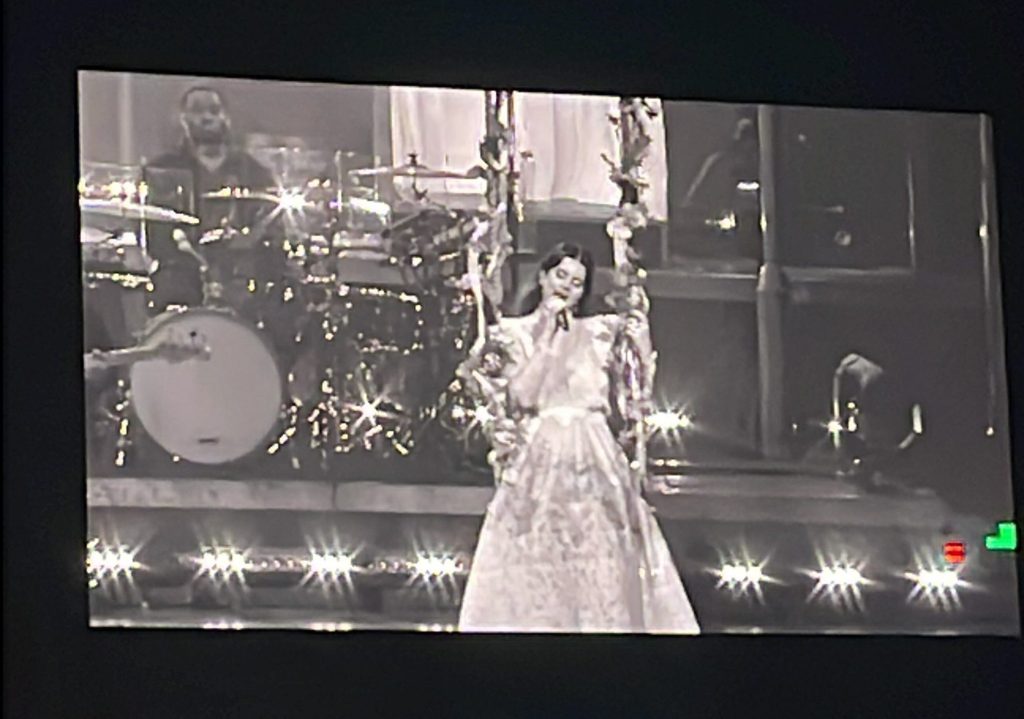
Lana Del Rey is one of my all time favorite artists so here is an essay through the lens of poetry.
Lana Del Rey is an admired singer who has solidified herself as an acclaimed artist in the music industry. With countless artists citing her as inspiration, Del Rey’s works have undeniably impacted the music industry. Her unique and haunting voice carries throughout her slow ballads creating a captivating listening experience for her fans. Although Del Rey is perceived as a singer by many, a deeper look at her countless works reveals her sincere and delicate songwriting that classifies her as an established poet.
Del Rey was born in New York City on June 21st, 1986, as Elizabeth Grant to parents Robert Grant and Patricia Hill. When she was one year old, her parents moved their family to Lake Placid, New York (Santino). Throughout her teenage years, Grant struggled with alcoholism and drugs, so at age fourteen, Grant was sent to boarding school in Connecticut for high school to get sober. For college, Grant moved to New York City, specifically the Bronx, to attend Fordham University and studied metaphysics (Heaf ). The poet was in rehab during her time in the Bronx and was focused on getting clean. During her time in New York City, Grant played in bars and clubs around the city and dabbled in songwriting. Grant was discovered by David Kahne, a record producer, after sending around her demos (Fennessey).
Shortly after being discovered, Grant moved to a trailer park in New Jersey where she made her first record (Blanning). In October 2008, the poet released her first EP called Kill Kill under the name Lizzy Grant, which had three songs on it. About a year later, in January 2010, her first full album of poems was released called Lizzy Grant a.k.a Lana Del Rey. This was the first time the poet used her now well-known stage name: Lana Del Rey (Ayers). Del Rey’s self-titled album was pulled after a short digital release with no physical release, and the poet separated from Five Points Record. Shortly afterward, she moved to London for a few years with her new manager (National Anthem).
In 2011, Del Rey had her first big break after she uploaded her self-made music video of her song “Video Games.” The song and video immediately went viral and gained attention for her sultry voice and the video’s aesthetics. This song was one of Del Rey’s first signs of greatness that showcased the diaristic and raw poetry she can write. In “Video Games” the poet wrote about past relationships and said that it was herself in song form (Beviglia). Immediately people were skeptical of Del Rey. The internet became obsessed with her image and thought she was “label-made” because of how she changed her name and dyed her hair auburn from blonde. In January 2012, Del Rey faced even more criticism for her shaky and flat performance on Saturday Night Live. The immense amount of criticism she received affected her confidence and made her even afraid to perform live. Nevertheless, she released her first major label collection of poetry Born to Die. Many of the album’s poems were inspired by Del Rey’s wilderness years of her life in New York when she was heavily drinking. She wrote about love and relationships and was recognized for her melancholic poetry. Despite the criticism of Del Rey, her debut album went number one in fourteen countries in 2012 (Heaf).
Del Rey released Ultraviolence and Honeymoon consecutively in 2014 and 2015. Both works include themes of love, drugs, and violence. In poems “Ultraviolence” and “Shades Of Cool,” the speaker recognizes the flaws in her relationships but cannot seem to stay away. Her growth as a poet is reflected in Honeymoon in which she also explores navigating through the struggles of fame (Horner). The poet captured her transition into fame and the allure of hollywood through this collection.
In the poetic discography by Del Rey, the album Lust For Life stands out for its undertones of hopefulness, resilience, and introspectiveness. Released in 2017, one year after the 2016 election, Del Rey writes about the current state of the world, specifically about being resilient in times of turmoil (Frank). In the poem “When The World Was At War Before We Kept Dancing” Del Rey sings: “Is it the end of America? / No, oh / It’s only the beginning / If we hold onto hope / We’ll have a happy ending” (Del Rey). The narrator believes in America and what it stands for and emphasizes the importance of resilience. The poet never felt comfortable enough to express political views through her works, but once she did, her poems became even more meaningful and resonated with a greater audience. This album acts as a predecessor to her next album’s greatness, in which she included this sort of social commentary throughout more of work.
Norman F**cking Rockwell! emerged in 2019 as Del Rey’s greatest poetic composition of her career and received the most critical acclaim (Kim and Bloom). The album was nominated for album of the year and song of the year at the Grammy’s making it Del Rey’s first album to be nominated for a major Grammy (Vanderhoof & Rich 2019). Del Rey delves fully into her social commentary in this work with even the name of the album being commentary on American society. Norman Rockwell was an American painter who painted pictures of modern America in the early twentieth century. Del Rey includes an endless number of references to America, pop culture, and California in this album, which is a sentiment to her way of being able to reflect society in her work. In the nine-minute-long track “Venice B**tch,” the Del Rey makes many references to ideas of the American dream and what it means to the narrator. The narrator expresses what they want in a relationship in the lines:
Give me Hallmark
One dream, one life, one lover
Paint me happy in blue
Norman Rockwell, no hype under our covers
It’s just me and you
The speaker paints a picture of a dream of having a traditional, picture-perfect American family seen through the various references to American culture throughout the poem. The narrator requests someone to give her “Hallmark,” a greeting card company that also produced movies mostly about love and family. She also states the This is a contrast from Del Rey’s earlier works that included the narrators longing for toxic relationships.
Del Rey’s next works Chemtrails Over The Country Club (2021), Blue Banisters(2021), and Did You Know That There Is A Tunnel Under Ocean Boulevard (2023) act as successive chapters in her poetic journey, which all contain the most mature poetry from Del Rey. After Norman F**cking Rockwell! introduced the theme of wanting the American dream of having the perfect “Hallmark” life, Del Rey cannot seem to stop writing about this. The narrator of the poem “Blue Banisters” expresses that there is a hole in her heart for a man that could give her children. In the poem “Sweet” on her latest album, the narrator longs for a lover who will settle down with her and have a family. In the poem “Black Bathing Suit,” the narrator calls herself a “traditional lover.”
The thirty-eight-year-old poet has been publishing her poems for fifteen years now. She is a popstar who is a hidden poet who has illustrated what it is like to be a woman in society. In her earlier works, Del Rey took a risk by releasing her dark poetry to the music industry. Although she received very harsh criticism, Del Rey persisted and remained true to herself with her writing. Everything finally paid off with her masterpiece of Norman F*cking Rockwell that solidified her as a serious artist and poet. The works that have come after her fifth album illustrates Del Rey as a mature woman who is reflective on her life, family, and career while she is still looking for love.
Works Cited
Ayers, Mike. “Why Lana Del Rey’s First Album Disappeared.” MTV, 30 Jan. 2012, www.mtv.com/news/2nps55/lana-del-rey-first-album-5-points-records-interview.
Beviglia, Jim. “Behind the Song: Lana Del Rey, ‘Video Games.’” American Songwriter, 15 Oct. 2021, americansongwriter.com/video-games-lana-del-ray-behind-the-song/.
Blanning, Lisa. “Paradise Lost: An Interview with Lana Del Rey.” Electronic Beats, 19 June 2013, web.archive.org/web/20131005012807/www.electronicbeats.net/en/features/interviews/lana-del-rey-interview/.
Fennessey, Sean. “Ice Breaker: Lana Del Rey.” GQ, 6 Oct. 2011, web.archive.org/web/20150313145103/www.gq.com/entertainment/music/201110/lana-del-rey-interview-video-games.
Frank, Alex. “Life, Liberty, and the Pursuit of Happiness: A Conversation with Lana Del Rey.” Pitchfork, 19 July 2017, pitchfork.com/features/interview/life-liberty-and-the-pursuit-of-happiness-a-conversation-with-lana-del-rey/.
Heaf, Jonathan. “Woman of the Year: Lana Del Rey.” British GQ, 1 Oct. 2012, www.gq-magazine.co.uk/article/woman-of-the-year-lana-del-rey.
Horner, Al. “A Letter from Lana Del Rey – the Full NME Cover Interview.” NME, 11 Dec. 2015, www.nme.com/features/a-letter-from-lana-del-rey-the-full-nme-cover-interview-757009.
Kim, Michelle Hyun, and Madison Bloom. “Lana Del Rey Announces New Album Norman Fucking Rockwell, Shares Song: Listen.” Pitchfork, 18 Sept. 2018, pitchfork.com/news/lana-del-rey-teases-new-song-venice-bitch-listen/.
“National Anthem.” NYLON MAGAZINE, 28 Nov. 2013, web.archive.org/web/20131203120905/www.nylonmag.com/articles/lana-del-rey-interview-nylon.
Rey, Lana Del. “Venice Bitch.” Spotify, Interscope Records, 30 Aug. 2019, open.spotify.com/track/3hwQhakFwm9soLEBnSDH17?si=b1f5b8b7f93446a8.
Rey, Lana Del. “When The World Was Wt War We Kept Dancing.” Spotify, Interscope Records, 21 July 2017, open.spotify.com/track/0dssTLrqY79Klk6jx2RXCj?si=3e917118832540fd.
Santino, Catherine. “All about Lana Del Rey’s Parents, Robert Grant and Patricia Hill.” Peoplemag, PEOPLE, 6 Jan. 2024, people.com/all-about-lana-del-rey-parents-8419614.
Vanderhoof, Erin, and Katey Rich. “Grammy Nominations 2020: Billie Eilish, Lizzo, and Lil Nas X Lead as the Grammys Try a New Balancing Act.” Vanity Fair, Vanity Fair, 20 Nov. 2019, www.vanityfair.com/style/2019/11/grammy-nominations-2020.


Leave a Reply